Blog / · 2 min

What MCP is, and why it matters for agent tooling

By Archilas

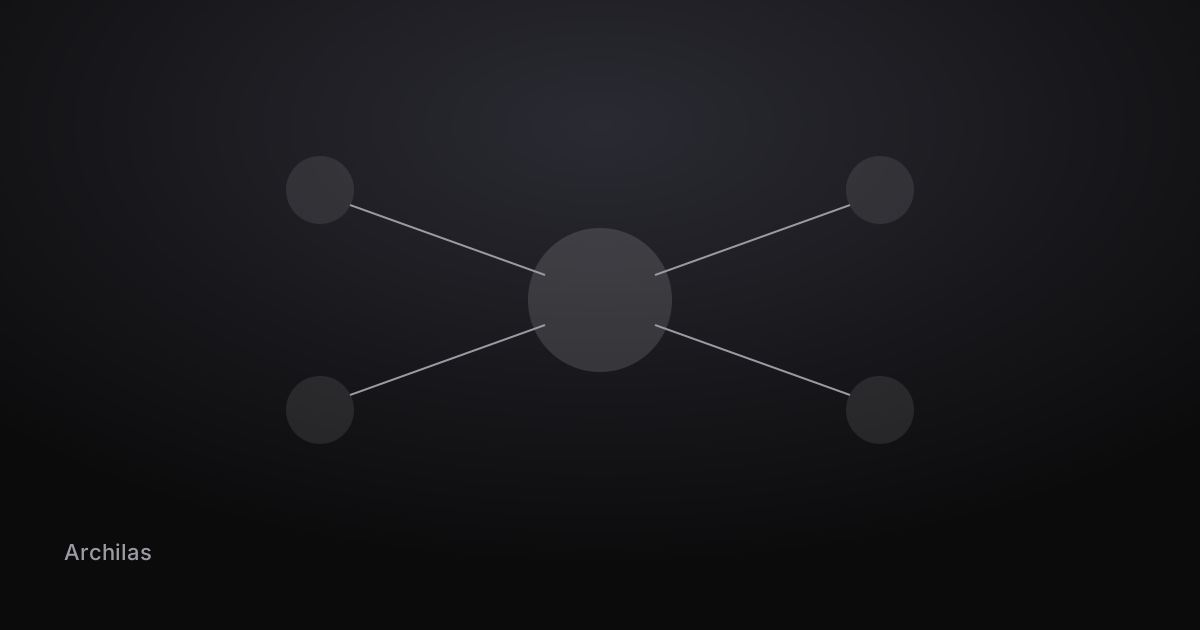
Abstract hubs-and-spokes graphic showing an AI client connecting to tools through a shared protocol layer

MCP (Model Context Protocol) is an open protocol that lets AI applications connect to external tools and context sources through a shared interface. It matters because memory, files, and services can plug into Claude, Cursor, and other clients without building a one-off integration for each product.

If you have wired the same capability into three different AI products, you already understand the pain MCP is trying to reduce. Each client wants context. Each client speaks a slightly different dialect of “tools,” “plugins,” or “connectors.”

A short definition

The Model Context Protocol standardizes how an AI client discovers and calls external capabilities. Instead of a bespoke bridge for every editor or chat app, a server can expose resources and tools in a form multiple clients understand.

Why memory belongs on that path

Memory is only useful if it shows up where you already work. Developers do not want a fourth chat window that holds the “real” context while Cursor and Claude remain unaware. Delivering memory through MCP means the same layer can meet you inside the tools you already trust.

  • One memory service, many clients.
  • Clearer boundaries between the model, the host app, and your data.
  • Room to evolve the memory system without rewriting every integration.

What to watch for

Protocols do not replace product judgment. You still need careful control over what is stored, what is retrieved, and how answers are grounded. MCP is the delivery rail. The quality of the memory on that rail is the actual product.

Archilas uses that delivery model so compacted memory and local reasoning can reach the AI tools you already use without asking you to abandon them.

All posts